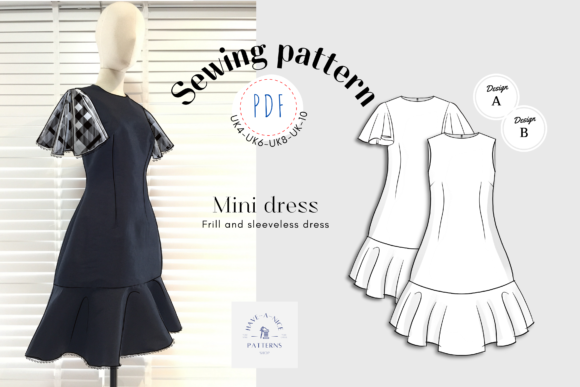
Frill and Sleeveless Mini Dress
Imagine a dress that balances bold detail with clean structure — frills that move with intention, not excess; a sleeveless silhouette that flatters without compromise; a mini length that feels modern, not fleeting. The Frill and Sleeveless Mini Dress digital pattern delivers exactly that: two distinct design options in one thoughtful file set — Design A with delicate frill sleeves, and Design B as a sleek, sleeveless version — both built around a precisely fitted bodice and a concealed back zipper for polish and wearability.
This isn’t just another PDF sewing pattern. It’s a versatile foundation designed for makers who value control over fit, fabric, and function. Whether you’re stitching a statement piece for summer events, developing a small-batch capsule collection, or experimenting with texture and proportion for a personal style project, this pattern supports intentional making — not guesswork.
Why This Pattern Fits Real Creative Work
The fitted silhouette is drafted for UK sizes 4–10 with clear, consistent grading across all measurements. The included size chart isn’t an afterthought — it’s calibrated to reflect real body proportions, not generic averages. That means fewer muslins, less redrafting, and more time spent on what matters: choosing the right fabric, refining construction details, or adapting the design for your audience.
Because it’s a digital-only pattern, there’s no shipping delay, no paper waste, and no storage clutter. You download three files instantly: A4 tiled pages (136 pages, seam allowances included), a single A0 sheet (5 pages) for large-format printing, and an A4 assembly illustration with flat drawings, print layout plan, and measurement diagrams. Everything is labelled clearly, in English, with no assumptions about prior pattern experience — though it’s best suited for confident beginners and up.
Fabric Choices That Shape Meaning
Fabric isn’t just material — it’s context. A crisp cotton poplin transforms Design B into a sharp, minimalist day dress ideal for creative freelancers meeting clients or educators leading workshops. Swap to a drapey viscose crepe, and Design A’s frill sleeves become soft, kinetic accents — perfect for content creators filming lifestyle reels or small business owners building authentic brand visuals.
Linen blends add texture and breathability for warm-weather markets or artisan fairs. Stretch sateen introduces subtle comfort for dance teachers or yoga instructors needing movement-friendly elegance. Even upcycled fabrics — think repurposed scarves, vintage table linens, or deadstock remnants — work beautifully here. The structured bodice holds shape, while the frills and mini hem invite playful reinterpretation.
Two Designs, One Pattern — Practical Adaptation Starts Here
Design A (frill sleeves) and Design B (sleeveless) aren’t just aesthetic alternatives — they’re functional starting points. Use Design A as a base for seasonal layering: shorten the frills for spring, extend them into dramatic tiers for autumn photoshoots, or swap the frill placement entirely — try a single tier at the cuff, or echo the shape along the neckline.
Design B opens space for surface storytelling. Its clean lines make it ideal for embroidery, screen-printed motifs, or hand-painted details — especially useful for illustrators, textile artists, or boutique owners developing signature pieces. Add inseam pockets for practicality, adjust the hemline by 2cm for modesty or impact, or interface the waistband differently to shift drape and structure.
Printing & Assembly: Precision Without Complication
Accuracy starts before you cut. Print at 100% scale — never “fit to page”. Enable borderless printing so each tile aligns cleanly edge-to-edge. Then, verify the 1cm test square at the top of every printed A4 page. If it measures exactly 1cm, your scaling is correct. That small check saves hours later — no mismatched seams, no frustrating realignment.
The A0 file is ideal if you have access to a plotter or local print shop. Five pages instead of 136 means faster assembly and fewer alignment points. Whichever format you choose, the tiled pattern includes seam allowances on all edges, and the assembly illustration shows exactly how the pages connect — no decoding required.
Who Uses This — And How
Hobbyists appreciate the clarity of instruction and the chance to build confidence with a fitted garment that still offers expressive detail. It’s a logical next step after simple shifts or wrap dresses — challenging enough to grow skills, but supported by precise markings and intuitive shaping.
Small fashion businesses use it to prototype quickly. Because the pattern works across four sizes with consistent ease, grading tests are streamlined. Pair it with fabric swatches and mood boards to present cohesive collections to buyers — or produce limited runs with custom linings, branded zippers, or signature frill trims.
Educators and workshop leaders find it reliable for teaching fit, grainline management, and zipper insertion techniques. The concealed back zip is a high-value skill — clean, invisible, and professional. Frills introduce gathering, pressing, and layering concepts without overwhelming complexity.
Bloggers and content creators use the dress as a repeatable visual anchor. Shoot it across seasons in different fabrics and styling — with boots and turtlenecks in winter, barefoot with straw bags in summer — to demonstrate versatility while maintaining brand consistency.
What’s Not Included — And Why That Matters
No step-by-step sewing tutorials are provided. That’s deliberate. This pattern assumes foundational knowledge — cutting on grain, staystitching curves, installing zippers, managing gathers — because it’s designed for makers who want autonomy, not hand-holding. What is included: accurate, tested pattern pieces; unambiguous seam allowances; precise measurement charts; and layout guidance that respects real-world printing constraints.
If you’re newer to fitted garments, pair this with a trusted technique resource — or sew Design B first to master the bodice before adding frills. That kind of scaffolding — choosing your own support — is part of what makes this pattern adaptable, not prescriptive.
Start Where You Are — Not Where You Think You Should Be
You don’t need a studio, a full fabric stash, or years of experience to begin. You need a printer, a few metres of fabric aligned with your intent, and the willingness to treat each seam as a decision — not just a line to follow. The Frill and Sleeveless Mini Dress gives you structure so you can focus on expression: how the frills catch light, how the fit supports your posture, how the hem swings when you walk.
That balance — of precision and possibility — is where meaningful making begins. Download. Print. Cut. Stitch. Then wear it, share it, refine it. Repeat.